




Consult Us
(+86)18168891000
The “Intelligent Porter” in Factories, Decoding the New Force of Logistics in Industrial Automation
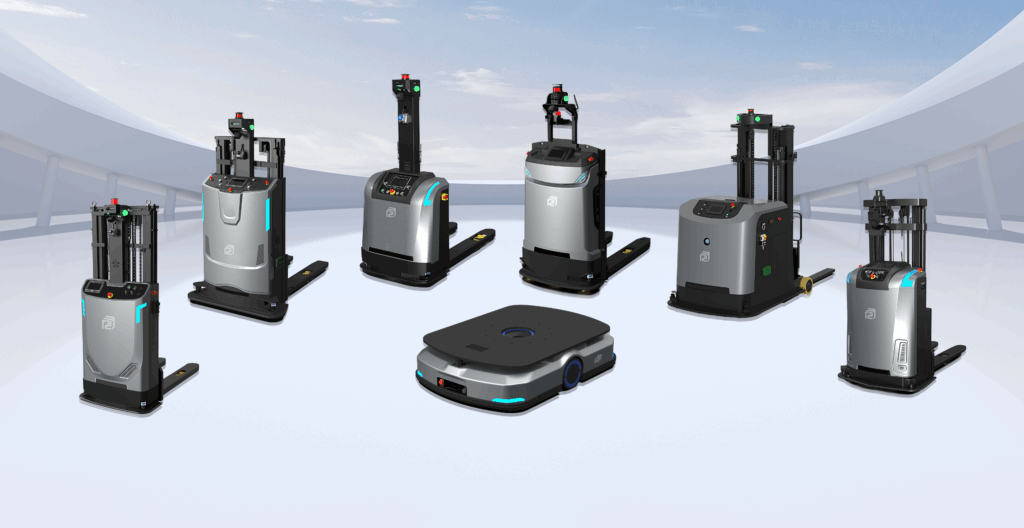
In the scenarios of modern factories and intelligent warehouses, there is a group of “carts” that operate without manual driving yet shuttle accurately between various types of equipment—they are Automated Guided Vehicles (AGV for short). From transporting auto parts in automobile manufacturing workshops to sorting goods in e-commerce warehouses, AGVs, as “intelligent porters”, are breaking the limitations of traditional industrial logistics and reshaping the logistics pattern of industrial automation.
I. What is AGV? Evolution from “Tracking Cart” to “Intelligent Robot”
Essentially, an AGV is an automated handling device with autonomous navigation capabilities. Its core function is to complete key logistics tasks such as material handling, loading, unloading, and distribution along preset paths or independently planned routes without manual intervention, serving as a “bridge” connecting production and warehousing links.
Looking back at the development history of AGVs, their technological iteration clearly shows a leap from “mechanical execution” to “intelligent decision-making”:
– Embryonic Stage (1953): A company in the United States developed the first AGV, which achieved tracking based on the principle of electromagnetic induction—electromagnetic tracks were laid on the ground, and the device traveled by identifying the path through magnetic sensors. At that time, AGVs were more like “tracking carts” with single functions and fixed paths, only meeting the needs of simple linear handling.
– Intelligent Upgrade Stage (Today): With the integration of sensors, AI, and IoT technologies, AGVs have evolved into “intelligent robots”. For example, AGVs equipped with front-and-rear dual-laser navigation can achieve two-way travel and real-time obstacle avoidance; devices integrating visual navigation and SLAM (Simultaneous Localization and Mapping) technology can independently scan the environment, build maps, and plan optimal paths; moreover, they can connect to the factory’s MES (Manufacturing Execution System) via the Internet of Things to receive task instructions in real time and feed back operating status, becoming the “nerve endings” of intelligent factories.

II. The “Intelligent Brain” of AGVs: Navigation Technology Determines Their “Level of Intelligence”
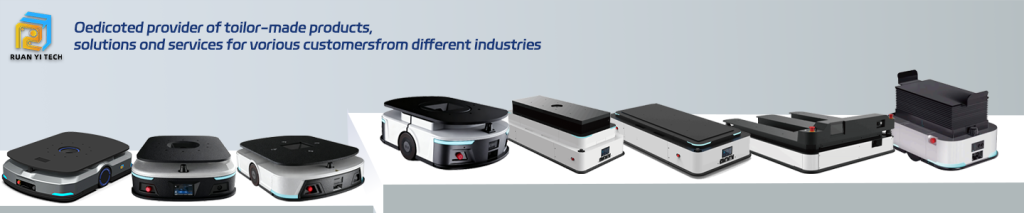
The ability of AGVs to operate autonomously lies in their hybrid navigation technologies, which support SLAM, QR codes, and reflectors. Different navigation methods determine their applicable scenarios:
- Magnetic Navigation: Magnetic strips or magnetic nails are laid on the ground, and AGVs identify the path through magnetic sensors. Its advantages include low cost and strong stability, making it suitable for scenarios with fixed paths (e.g., auto parts distribution in automobile assembly lines); its disadvantage is poor flexibility, as re-laying magnetic strips is required when changing paths.
- QR Code Navigation: QR codes are pasted on the ground, and AGVs identify their positions through cameras. Its advantages are high positioning accuracy (up to ±5mm) and easy path modification, which is often used in dense sorting scenarios in e-commerce warehouses; however, it is susceptible to ground contamination and wear.
- Laser SLAM Navigation: AGVs are equipped with laser radars to scan the surrounding environment, build maps, and achieve real-time positioning. It does not require preset tracks, can independently plan paths, and adapts to complex and changeable scenarios (e.g., flexible production lines with multiple varieties and small batches), making it the “mainstream high-end solution” for current AGV navigation.
- Visual Navigation: It relies on cameras and image processing technology to identify natural features in the environment (such as walls and shelves) for positioning. It has low cost and flexible deployment but is sensitive to light and environmental changes.
III. The “Physical Structure” of AGVs: Precise Collaboration Between Hardware and Systems
The stable operation of an AGV depends on the collaborative work of its mechanical body, perception system, control system, and power system, each with clear and indispensable functions:
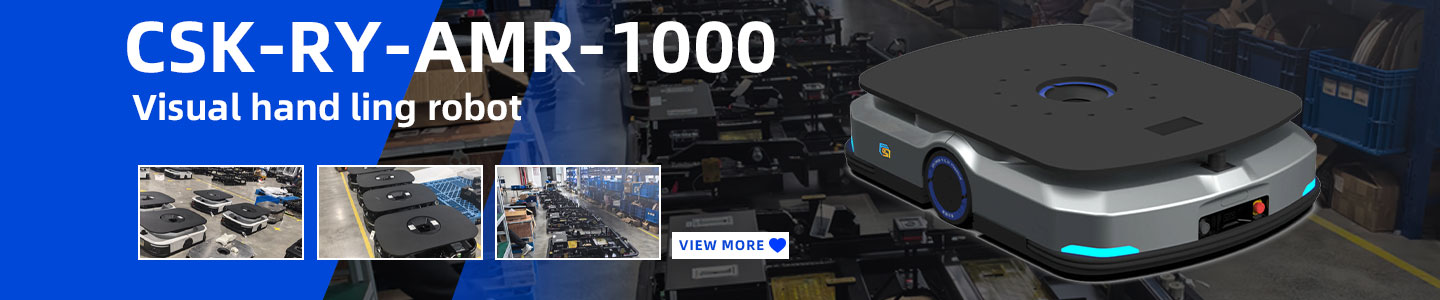
– Mechanical Body: It undertakes the functions of carrying goods and moving. It is designed into different forms according to handling needs—latent AGVs can dive under shelves to lift and transport goods, forklift-type AGVs can lift and load/unload goods, and traction-type AGVs can pull multiple material carts, meeting diverse needs from “small-item sorting” to “heavy material handling”.
– *Perception System: Like the “eyes” and “ears” of an AGV, it consists of laser radars (for detecting obstacles), cameras (for identifying QR codes/natural features), infrared sensors (for short-distance obstacle avoidance), and encoders (for recording travel distance). It collects environmental data in real time to provide a basis for decision-making.
– Control System: As the “brain” of an AGV, it integrates algorithms for path planning, task scheduling, and motion control—for example, after receiving system instructions, it automatically plans the shortest path; when encountering obstacles, it quickly determines a detour plan; at the same time, it coordinates the operation of motors and steering gears to ensure stable travel.
– Power System: Currently, lithium batteries are the mainstream power source, supporting fast charging (full charge in 1-2 hours) and automatic charging (AGVs independently go to charging piles when the battery is low). Some high-end devices have begun to use hydrogen fuel cells, enabling 24/7 uninterrupted operation to meet the “three-shift” production rhythm of factories.
IV. The “Stage” of AGVs: Ubiquitous Application Scenarios from Factories to Warehouses
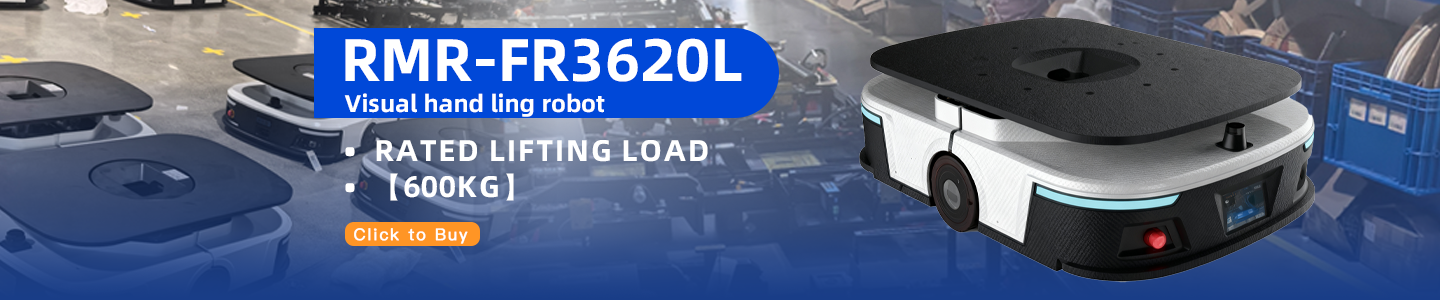
The applications of AGVs have long exceeded traditional manufacturing and extended to multiple fields, becoming a key tool for improving efficiency and reducing costs:
- Manufacturing Industry: In the automobile, electronics, and 3C industries, AGVs are “production necessities”. For example, in the welding workshop of an automobile factory, AGVs can accurately transport stamping parts to welding stations with a positioning error of less than 1cm, avoiding deviations caused by manual handling; in electronic factories, AGVs can safely transport chips and motherboards in clean rooms, reducing the risk of contamination by personnel.
- Warehousing and Logistics: During peak e-commerce periods, the “cluster operation” advantage of AGVs is prominent. The “AGV team” in a logistics center can sort hundreds of pieces of goods per hour, with an efficiency more than 3 times that of manual work and an error rate of less than 0.1%, effectively solving the problem of “warehouse overcrowding”.
- Medical Field: In hospitals, AGVs undertake tasks such as drug distribution, specimen transportation, and medical waste disposal—for example, in infectious disease areas, AGVs can shuttle independently between wards and pharmacies, reducing direct contact between medical staff and patients; in clinical laboratories, AGVs can accurately transport specimens, avoiding delays and errors caused by manual delivery.
V. The Future of AGVs: New Directions of Intelligence, Collaboration, and Green Development
With the development of artificial intelligence, 5G, and IoT technologies, AGVs are evolving toward higher efficiency, greater intelligence, and better environmental friendliness, and will show three major trends in the future:
- Intelligent Upgrade: Through AI algorithms, AGVs will realize “autonomous learning”—for example, optimizing paths based on historical data to avoid congested sections; predicting equipment failures through vibration and temperature sensors and proactively reporting to the system for maintenance, reducing downtime.
- Collaborative Operation: Multiple AGVs will realize “cluster scheduling” and collaborate efficiently like an ant colony—for example, in a warehouse, 100 AGVs can assign tasks through a cloud system, with some responsible for picking up goods, some for sorting, and some for replenishment, improving overall efficiency by more than 50% to cope with complex logistics scenarios.
- Green Development*: New energy technologies will gradually replace traditional lithium batteries—hydrogen fuel cell AGVs can achieve a battery life of more than 8 hours with zero emissions; super capacitor AGVs only take 10 minutes to charge, making them suitable for high-frequency, short-distance handling scenarios and helping factories achieve the goal of “carbon neutrality”.
From “tracking carts” in workshops to “logistics hubs” in intelligent factories, every technological breakthrough of AGVs promotes the progress of industrial automation. They are not only handling devices but also vivid epitomes of “smart manufacturing” in the Industry 4.0 era. In the future, with continuous technological iteration, AGVs will further enter fields such as agriculture (farm material transportation), ports (container handling), and households (smart home handling), continuously releasing the value of “intelligent porters” and empowering the efficient operation of production and logistics.
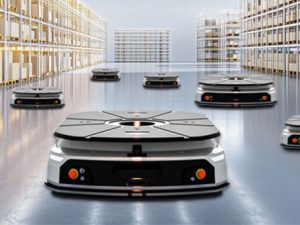
AI-Powered Logistics Revolution
RuanYi Technology is a high-tech enterprise specializing in artificial intelligence and robotics. With technological innovation as its core driver, it provides intelligent, customized logistics automation solutions for diverse industries, leveraging deep expertise in AI algorithms, robot control, and system integration to advance logistics digital transformation and efficiency.