


Meeting Objective: Targeting Communication Bottlenecks
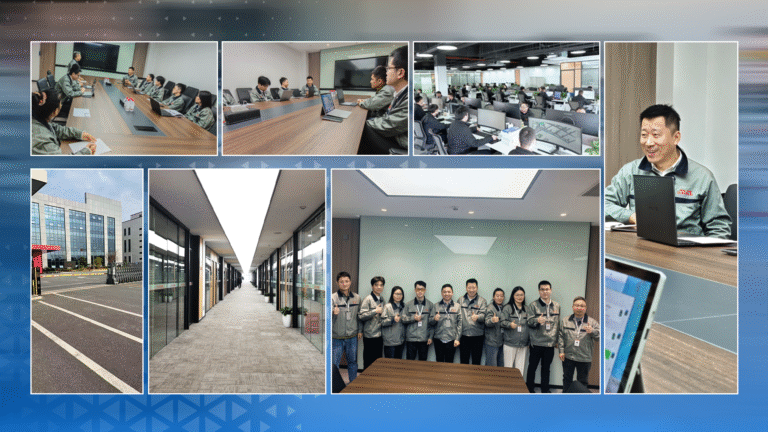
Our company’s Marketing Department held a special AGV robot customer service review meeting on Monday. Its core goal was to optimize customer communication mechanisms and boost service efficiency. Recent AGV business communications faced persistent challenges: vague technical explanations and delayed responses to customer inquiries. To address these, the meeting—jointly organized with the Technical Team—adopted a results-driven model: “pre-compile customer pain points + formulate communication solutions on-site”. In just half a day, the team resolved bottlenecks hindering AGV customer communication. Inefficient dialogues became smooth and effective, accelerating cooperation progress.
Customer-Centric Approach: Cases & Demos Drive Clarity
The meeting followed a focused agenda. All discussions aimed to enhance customer communication efficacy. Before the meeting, the Technical Team systematically collected eight high-frequency AGV-related customer questions. These included: “What is the load-bearing adaptability of the latent AGV?” “Is it compatible with existing path planning systems?” and “How to integrate it with our WMS system?” During the meeting, the team used a customer-centric approach. They combined case analysis and live demonstrations to provide targeted responses.
An electronic manufacturing client’s core question—”What tangible benefits do AGVs bring?”—served as the starting point. The team clarified past communication misunderstandings in 3 minutes. In 5 minutes, they completed a live demo: 400kg load-bearing test and ±5mm positioning accuracy verification. They then shared verifiable data: a 60% increase in material turnover efficiency. This approach turned complex technical parameters into clear value points. It focused solely on customer-centric information, ensuring concise and effective communication.
This customer-centric method streamlined communication. Taking an electronics client’s key question—”What benefits do AGVs bring?”—the team acted fast. They cleared up past misunderstandings in 3 minutes. A 400kg load test and ±5mm positioning accuracy demo followed in 5 minutes. They also shared verified data: 60% higher material turnover. Complex specs became clear value propositions, making communication concise and customer-focused.
Standardized Templates: Ensuring Immediate Responses
To address customer concerns about AGV end-to-end services, the Technical and Logistics Teams jointly released standardized communication templates during the meeting. These templates cover key details: anti-damage packaging specifications, GPS real-time tracking methods, and next-day delivery within 200 kilometers. Marketing staff can now respond to customer inquiries immediately. No more delays from multi-departmental coordination. The meeting set a clear service rule: all AGV-related customer questions must get accurate, timely replies. This solved the long-standing issue of “waiting long for vague answers”, ensuring efficient and reliable customer interactions.
Tangible Outcomes: Communication Efficiency Triples
“Previously, explaining AGV tech used too much jargon. Customers lost interest quickly,” a senior marketing specialist noted. “Now, with the ‘case data cards’ from this meeting, I show key metrics. In 10 minutes, customers start talking about cooperation.” This highlights the meeting’s huge impact on communication. The review fundamentally changed how the team communicates with AGV customers. It shifted from passive response to proactive needs anticipation. Lengthy tech talks became efficient pain point matching. As a result, latent AGV project docking efficiency tripled. It moved from “guessing needs” to “accurate, instant matching”.
Follow-Up Actions: Solid Tools for Sustained Efficiency
Efficient communication needs strong tools—and the team delivered them fast. By meeting’s end, the Technical Team finished the first draft of the “Customer-Oriented AGV Technical Guide”. It avoids jargon and focuses on clear, actionable info. Meanwhile, the Marketing Department built a dual-resource library: case studies plus performance data. Meeting outcomes became practical communication tools the same day. They were ready to use the next day. All participants promised to stick to the meeting’s core principles: prompt response, clear communication, and value-focused delivery. Their goal is to maximize AGV customer interaction efficiency and drive successful, mutually beneficial cooperation.